EN
EN  IT
IT  SQ
SQ  ES
ES  FR
FR 
The dental implants have become one of the most effective and durable solutions for replacing missing teeth. They restore both the aesthetics and functionality of natural teeth, offering stability, comfort and durability.
Understanding how dental implants work helps patients understand why this treatment is considered the benchmark of modern dentistry.
A dental implant is much more than just an artificial tooth. It is a complete system that integrates with the bone, supports daily chewing forces and maintains oral health for decades. This article explains the structure of dental implants, how they work and the long-term benefits they offer.
The Structure of a Dental Implant
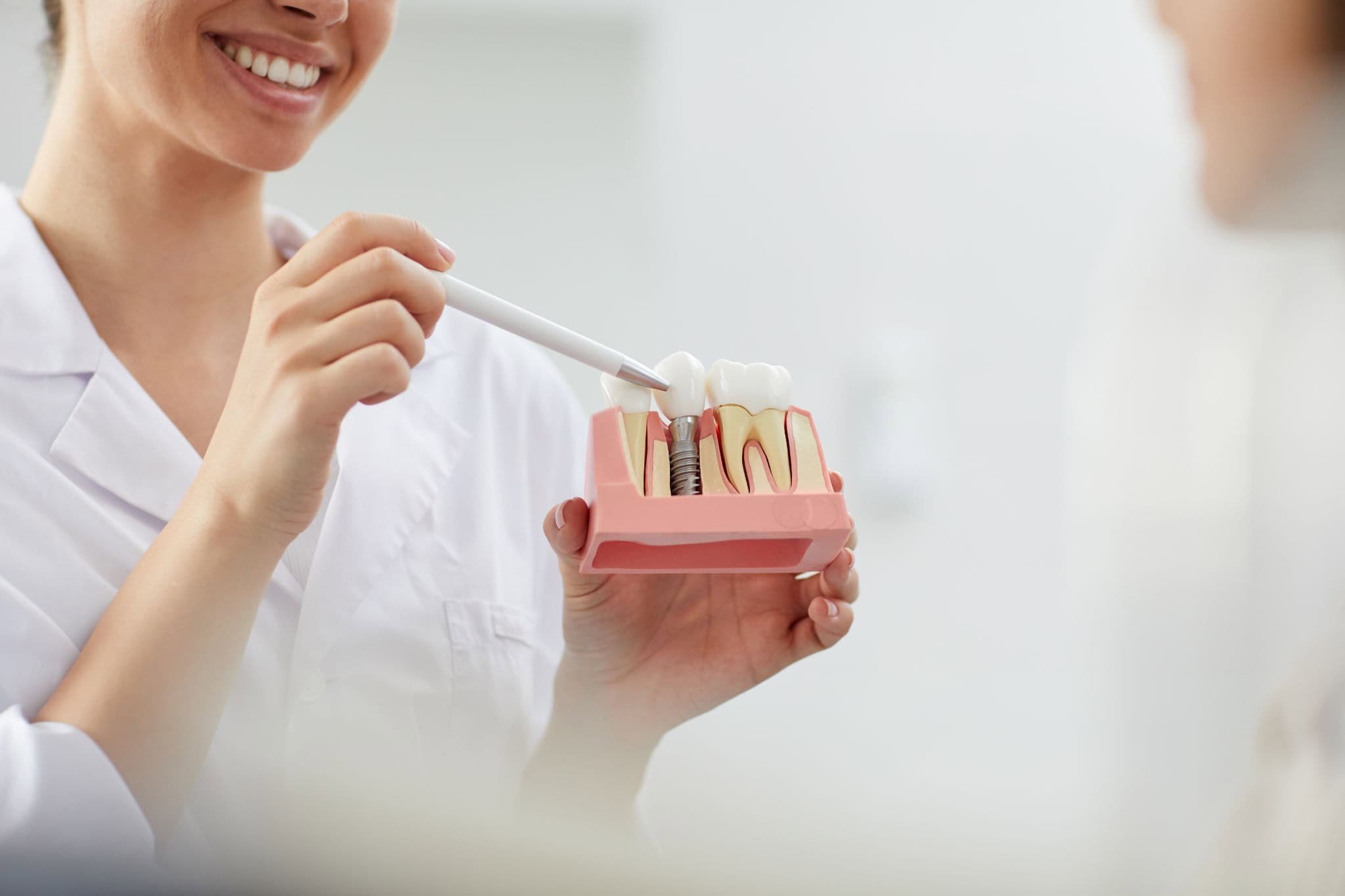
A dental implant consists of three main components. Each component plays a specific role in creating a stable and natural tooth replacement.
The framework is designed to imitate a real tooth, from root to crown. This makes implants different from removable dentures or bridges, which only replace the visible part of the tooth.
The main components include:
- The implant screw (a titanium or zirconia screw inserted into the jaw bone).
- The abutment (the connector attached to the implant).
- The crown (the visible tooth positioned above the abutment).
1. The Implant Screw
The implant screw represents the basis of the implant. It is surgically inserted into the jawbone and functions like a natural tooth root.
Most implant screws are made of titanium because it is biocompatible and integrates well with the bone. Some patients may receive zirconia implants, which offer a metal-free alternative.
2. The Abutment
The abutment connects the implant screw to the crown. It is screwed or cemented onto the implant after the healing phase.
This component creates a secure connection for the visible tooth. It also guarantees the correct alignment and stability of the final restoration.
3. The Dental Crown
The crown is the part of the implant that looks like a natural tooth. Crowns are custom-made to fit shape, size and colour.
The most common materials include zirconia and ceramic. These materials offer durability and a natural appearance that harmonises with the surrounding teeth.
How Dental Implants Work
Dental implants work thanks to a biological process called osseointegration. This process allows the implant to fuse with the jawbone and create a stable base for the new tooth.
Once integrated, the implant becomes strong enough to support chewing, phonation and all daily oral functions. This makes implants a permanent and reliable solution.
The Osseointegration Process
Osseointegration refers to the fusion of the implant with the surrounding bone. This process takes several weeks up to a few months, depending on the case.
During healing, bone cells become firmly attached to the implant surface. This creates long-term stability and prevents any movement, just like the roots of natural teeth.
Step-by-Step Operation
Below is a simplified explanation of how implants work in practice.
- The implant is inserted into the bone through a small surgical procedure.
- The implant integrates with the bone over time.
- The abutment is applied once healing is complete.
- The dental crown is fixed over the abutment.
- The end result works and feels like a natural tooth.
This multi-step process guarantees functionality, precision and reliability.
Why Dental Implants Work Better Than Other Restorations
Dental implants differ from removable dentures and bridges in that they are anchored directly into the bone. This anchoring prevents movement, discomfort and bone loss.
Removable dentures rest on the gums and can shift, while bridges require the filing down of healthy teeth. Implants avoid these problems and preserve the natural oral structure.
The main functional advantages include:
- Improved chewing strength, similar to that of natural teeth.
- No movement or displacement during chewing or speaking.
- Support for the teeth and surrounding bone.
- Greater comfort and stability in the long term.
Long-Term Benefits of Dental Implants
Dental implants offer a wide range of benefits that go beyond simply replacing a missing tooth. They improve oral health, lifestyle and general well-being. These benefits make them a preferred choice for patients seeking a permanent solution.
Bone Preservation
When a tooth is lost, the bone in that area gradually starts to shrink. Implants stimulate the jawbone like natural teeth and prevent bone deterioration.
This helps to maintain the structure of the face and prevent premature ageing.
Natural Look and Feel
The implants are designed to look and feel like natural teeth. The crown is custom-made to harmonise with the patient's smile.
Since the implant is anchored inside the bone, it provides a natural feel during chewing and speaking.
Durability in the Long Term
Dental implants can last for decades with proper care. Many patients keep their implants for life.
The materials used are durable, caries-free and able to withstand daily chewing forces.
Improvement of Chewing and Function
Implants restore normal chewing ability. Patients can eat food that would be difficult to eat with removable dentures or weakened teeth.
Better chewing aids digestion and overall nutrition.
Stability and Comfort
Unlike removable dentures, which can move or cause irritation, implants remain firmly in place. This eliminates the need for adhesives or frequent adjustments.
Patients gain confidence in daily activities, including eating, talking and laughing.
Improving Oral Health
Implants do not require the modification of adjacent healthy teeth. Traditional bridges often require filing down neighbouring teeth, weakening them over time.
Implants allow independent tooth replacement and help maintain long-term oral health.
Simple Maintenance
Implants require the same care as natural teeth. Patients simply have to brush their teeth, floss and have regular check-ups.
There is no need to use special solutions or remove anything overnight.
Who Is a Good Candidate for Dental Implants
Most adults with missing teeth and good oral health are suitable candidates. A full evaluation is required to check the quality of the bone and the condition of the gums.
Patients with bone loss may still be eligible through procedures such as bone grafting or sinus lift.
Ideal candidates include:
- Adults missing one or more teeth.
- Patients with healthy gums and good oral hygiene.
- People with sufficient jaw bone to support an implant.
- Those looking for a permanent solution instead of removable dentures.
The Role of Technology in Plant Success
Modern dental clinics use digital technologies to improve precision and results. This includes 3D imaging, digital impressions and guided implant surgery.
The technology helps determine the exact position and correct angle of the implant. This increases precision, reduces surgical time and improves long-term success rates.
Conclusion
Dental implants work by replacing the root of a missing tooth and integrating directly with the bone. Their multi-unit structure creates a durable, natural replacement that restores chewing strength, protects oral health and lasts for decades.
With benefits such as bone preservation, long-term stability, natural aesthetics and high comfort, dental implants remain one of the best solutions for tooth loss. Understanding their design and function helps patients make informed decisions and understand the transformative impact implants can have on their daily lives.