EN
 IT
 SQ
 ES
 FR

Before-and-after photos of dental veneers can show significant smile transformations, but they do not guarantee that every patient will achieve the same result. Veneers can improve the colour, shape, size and symmetry of teeth. If you’re considering dental veneers in Albania, learning how to assess images properly is important before choosing a treatment. At Family Dental Care in Tirana, the process starts with the health of your natural teeth, the condition of your gums, your bite and your cosmetic expectations: a smile should be functional as well as look good in photographs.
Dental Veneers Before and After: What Changes Can You Expect?
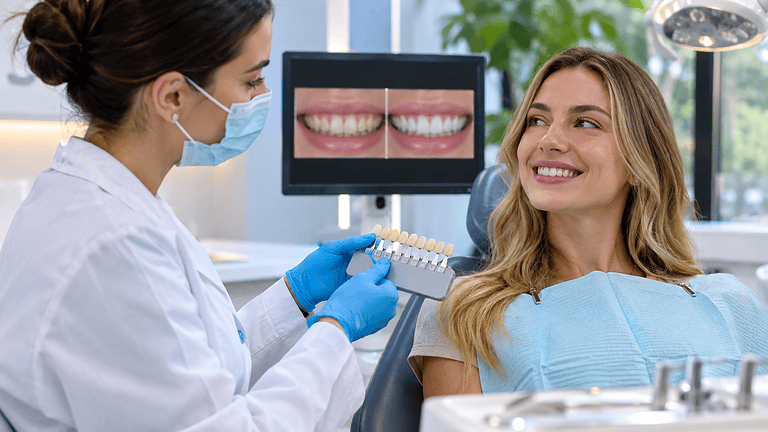
Photos can show changes in tooth colour, incisal edges, width, length and smile symmetry. They can also help you identify the style you prefer: natural, brighter or with more uniform proportions. A harmonious result does not necessarily require perfectly identical teeth: small differences between incisors and canines can make a smile look more natural.
To explore the topic visually, you can view Family Dental Care’s Instagram post about dental veneers and cosmetic alternatives. The social media post is for illustrative purposes and does not replace a personalised clinical assessment.
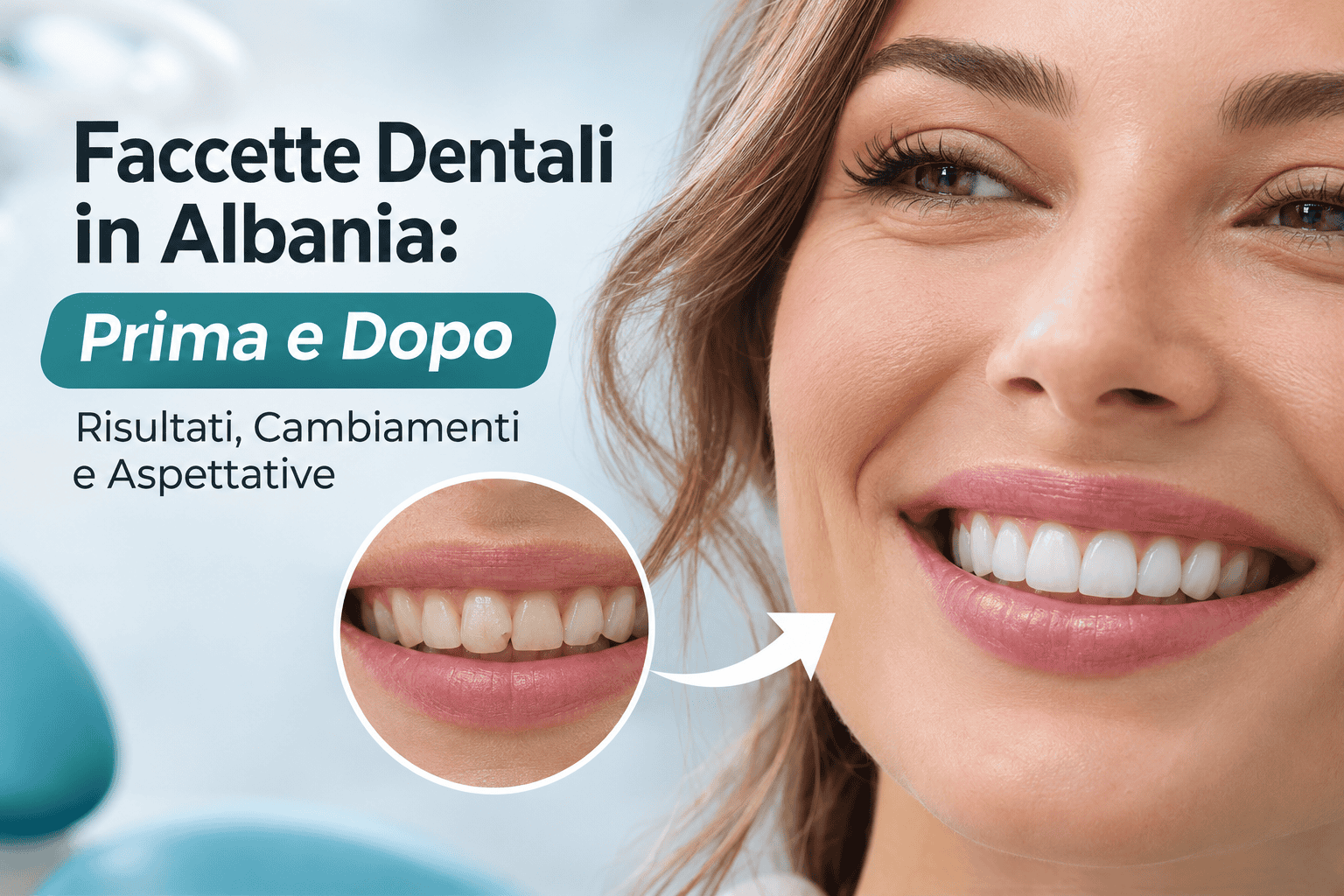
However, images cannot show how much enamel was removed, whether the restoration fits properly, whether the bite is functional or what the gum condition was. Some transformations involve a combination of procedures, such as whitening, orthodontics or crowns. Before comparing results, ask which treatments were actually performed.
At Family Dental Care, the assessment for dental veneers in Albania starts with each patient’s needs and clinical condition. Photographs are useful for discussing expectations, but a final plan requires a dental examination.
How Do Veneers Change Tooth Color, Shape and Spacing?
Veneers are thin restorations applied to the visible surface of the teeth, especially the front teeth. They can correct selected cosmetic imperfections, but they do not automatically replace orthodontics, gum treatment or other necessary care. The choice of material—including E-Max lithium disilicate ceramic where appropriate—depends on the tooth, the bite, the remaining tooth structure and the cosmetic plan.
A More Even Colour Without an Artificially White Look
Significant discolouration can make some teeth look very different from the others. Veneers may be considered when the desired colour change cannot be achieved with more conservative options, or when the shape also needs to be changed.
The brightest white is not always the most harmonious choice. The shade should work with the neighbouring teeth and facial features, taking into account how the smile will look in everyday life and under different lighting. The choice should not be based solely on a flash photograph.
Tooth shape, length and edges
Small incisors, chipped edges and differences in tooth length can affect the appearance of a smile. A well-designed restoration can improve these proportions while respecting the available space and contact with the opposing teeth.
The ideal shape is not the same for everyone. A natural-looking smile often retains small differences between incisors and canines rather than making them perfectly identical.
Small Gaps and Minor Irregularities
Some gaps between the front teeth can be made less noticeable by changing their shape. However, closing a diastema with veneers does not move the tooth roots.
If the gap is wide or the misalignment affects your bite, it may be more appropriate to consider Invisalign and clear aligners. In some cases, orthodontic treatment beforehand can also help limit changes to your natural teeth.
How to Evaluate Before-and-After Photos Without Being Misled
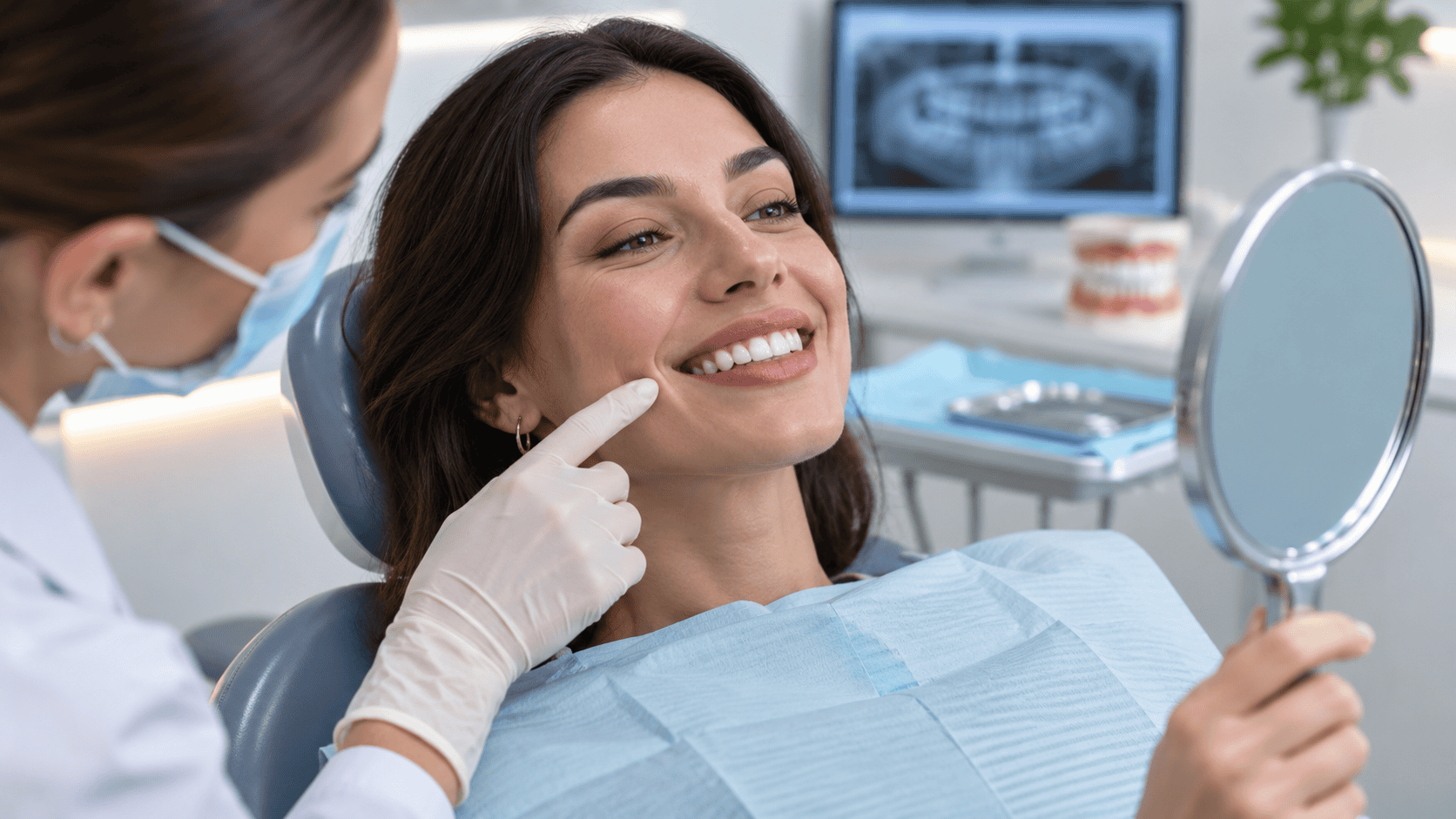
Two images taken from different angles, distances or under different lighting can artificially exaggerate the transformation. The same smile looks brighter under intense light and more even from a flattering angle. A useful comparison should also show the gum line and indicate whether the result includes veneers, crowns, whitening or other procedures.
When looking at a result, check these elements:
- Lip position and type of smile in both photographs.
- Camera distance and perspective.
- Comparable lighting and colour balance.
- Visibility of the front and side teeth.
- Clear indication of the treatments actually performed.
- No cosmetic filters that alter colour or texture.
Dental Veneers Before and After: What Photos Show and What Requires an Examination
| Feature observed | Information visible | What to check clinically |
|---|---|---|
| Brighter teeth | Colour change | Condition of the enamel and tissues |
| More even edges | Improved apparent shape | Contacts during chewing |
| Less noticeable gaps | Change in proportions | Root position |
| Even smile line | Aesthetic balance | Gum health and levels |
| Natural-looking restorations | Photographic harmony | Fit, hygiene and maintenance |
The table is not intended to cast doubt on the photographs, but to help you understand their limitations. Aesthetic results are only one part of the overall quality of dental treatment.
You can use Family Dental Care’s before-and-after gallery to identify features you like. Always ask which procedures were performed and whether the cases shown are truly comparable to yours.
How are natural-looking dental veneers designed?
Smile design takes into account lip shape, how visible your teeth are when you speak, the gum line, facial proportions and the relationship between your dental arches. Your consultation may include clinical photographs, impressions or digital scans, as well as a discussion of your aesthetic preferences. Before placing veneers, the dentist must check your bite and address any gum problems. The result should harmonise with your natural teeth rather than simply copying someone else’s.
From our Instagram: To learn more about dental veneers, you can view this post published by Family Dental Care on Instagram. Clinical results always depend on individual circumstances.
Do dental veneers always require tooth preparation?
Preparation depends on the position of the tooth, the material and the aesthetic goal. Some cases require a small amount of enamel to be removed, which is generally irreversible. In other cases, minimal preparation may be possible, but not everyone is a candidate for no-prep veneers. It is important to discuss in advance how much tooth structure may need to be altered and what conservative alternatives are available.
Veneers, teeth whitening, bonding or crowns: which treatment should you choose?
A ceramic restoration is not always necessary. A minor change in colour may be treated with whitening, while a small chip could be addressed with a conservative treatment.
In other situations, the priority is to correct alignment or protect a severely damaged tooth. Comparing veneers, bonding and dental crowns helps explain why different treatments address different problems.
The choice depends on how much healthy tooth structure remains, gum health, your bite and the result you want. Whitening may be enough when the main concern is colour; composite bonding can repair small chips; Invisalign can correct tooth positions; and crowns can protect more weakened teeth. A consultation should clarify not only what can be changed, but also which tooth structures should be preserved.
How Long Do Dental Veneers Last, and How Can You Maintain the Results?
Veneers can be long-lasting restorations, but they do not necessarily last a lifetime: they may chip, come loose or need replacing. Their longevity depends on the material, your bite, bruxism and oral hygiene. Brush twice a day, clean between your teeth, avoid biting very hard objects and attend professional check-ups. If you grind your teeth, ask your dentist whether a night guard may be helpful.
Before your trip, you can discuss your expectations during an initial dental consultation in Tirana. Previous photographs and records are useful, but the cosmetic plan is confirmed after a clinical assessment.
FAQ: Dental Veneers Before and After in Albania
Can Veneers Look Like Natural Teeth?
Yes, veneers can look very natural when their colour, shape and proportions are chosen to harmonise with your face. However, the aesthetic result depends on your starting point and individual treatment plan.
Do Before-and-After Photos Guarantee the Same Results?
No. They show what was possible for another patient. Teeth, gums, bites and expectations can differ, even in people with seemingly similar concerns.
Can Veneers Correct Crooked Teeth?
Some minor irregularities can be concealed by changing the apparent shape of the tooth. If the issue is true misalignment, orthodontic treatment may be a more suitable option.
Do All Veneers Require Tooth Shaving?
Not all veneers require the same preparation, but many treatments involve altering the enamel. Your dentist should explain in advance what changes are needed and whether conservative alternatives are available.
How Can I Choose the Smile I Want?
You can collect images that show your preferences for shape and colour. Use them as a reference during your consultation, not as a template to reproduce exactly.
Assess Your Smile with Family Dental Care in Tirana
At Family Dental Care, we consider your aesthetic preferences alongside the clinical condition of your teeth. Contact us to discuss a personalised plan that takes harmony, function and oral health into account.
- Email: info@familydentalcareal.com
- Headquarters Kongresi i Manastirit Road, Tirana, Albania
- Contact: Request a consultation