EN
 IT
 SQ
 ES
 FR

How many days does it take to get zirconia crowns in Albania? The duration depends on the number of restorations, the condition of your teeth, laboratory turnaround times and any preliminary treatment needed. Some straightforward cases can be arranged in just a few days, while traditional treatment may require two appointments separated by one or more weeks. If you’re travelling from Italy, it’s important to get an individual estimate before booking your return flight: no schedule should be guaranteed without a clinical assessment.
How Long Does It Take to Get Zirconia Crowns in Albania?
Treatment involves more than cementing the final crown: it includes an examination and diagnosis, any preliminary treatment, tooth preparation, an impression or digital scan, laboratory work, a fitting and placement. Some treatment plans allow appointments to be scheduled close together, while others require waiting and further checks. A precise fit and comfortable bite take priority over speed.
A single crown on a healthy tooth may require fewer appointments than restoring several teeth. Deep decay, root canal treatment, gum problems or complex reconstruction can extend the schedule. It’s important to distinguish an initial estimate from the final schedule agreed after your appointment.
At Family Dental Care, choosing dental crowns in Albania is part of a plan that takes into account appearance, function and oral health. The actual treatment time must be confirmed after a clinical examination, not based solely on photos sent before your trip.
How Are Zirconia Crowns Fitted? The Treatment Steps
Knowing the steps helps you organise your stay without squeezing in necessary appointments. Some can be scheduled close together, while others require laboratory time or additional checks.
To learn more about the process, you can watch Family Dental Care’s Instagram post about dental crowns and the fitting stage. The social media post is for illustrative purposes and does not replace a personalised clinical assessment.
Examination and diagnosis
The dentist examines the tooth to be restored, your gums, existing fillings, contact with neighbouring teeth and your bite. If needed, X-rays are used to check for problems that aren’t visible during the clinical examination. A crown should be recommended based on how much of the tooth remains, not solely to improve its appearance.
A tooth with an infection or a compromised restoration may need preliminary treatment. In these cases, the priority is to address the problem before proceeding with the final restoration.
Preparation and impressions
When a crown is recommended, the tooth is prepared to make room for the material. The dentist then records its shape using a traditional impression or a digital scan, depending on the treatment approach.
The shade and proportions are also considered at this stage. The finished crown must fit in with your existing teeth without creating excessive contact when you chew.
Laboratory fabrication
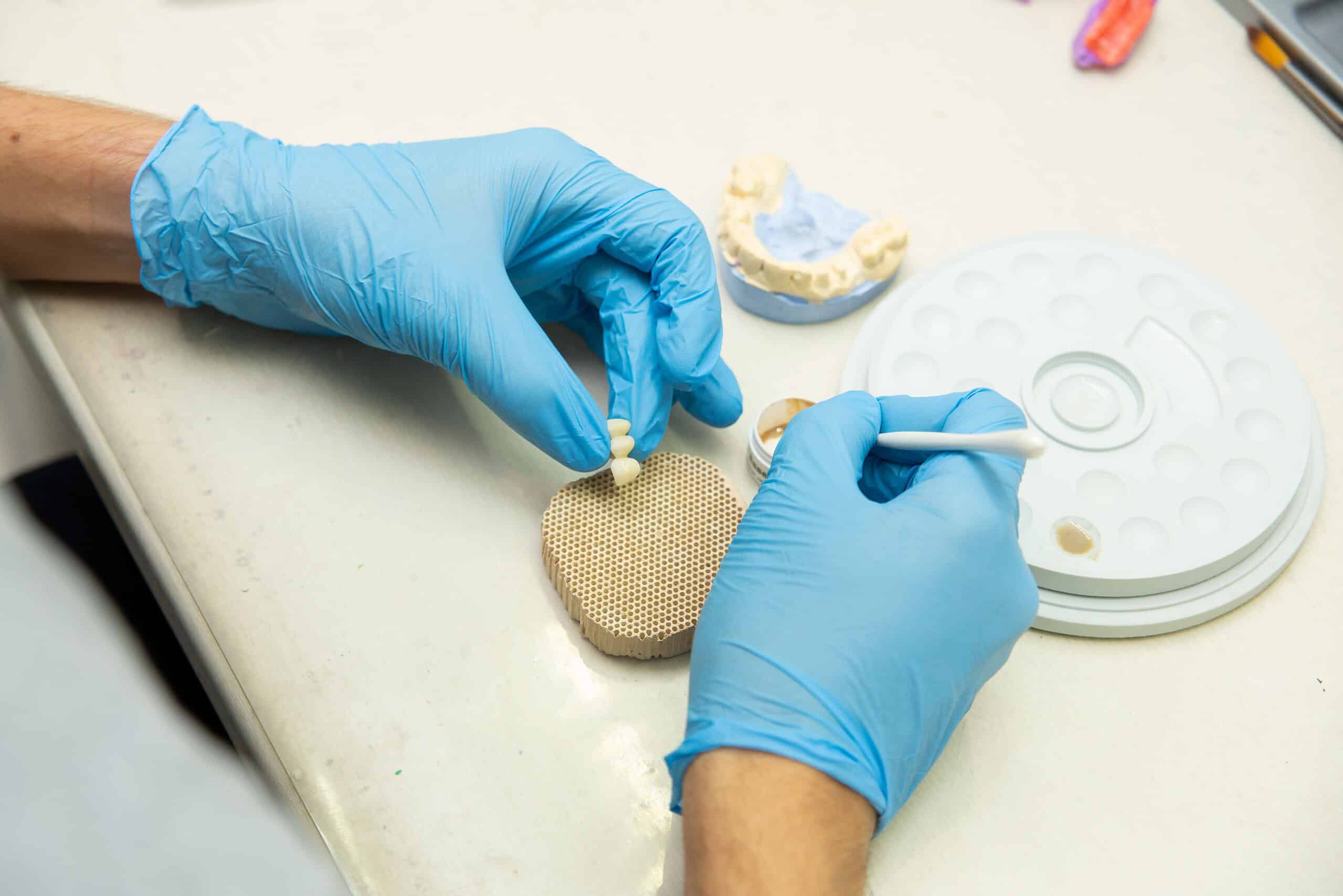
The dental laboratory makes the zirconia crown according to the clinical specifications, defining its shape, thickness, contours, shade and relationship to neighbouring teeth. Digital technology can simplify some steps, but the restoration’s precision and fit still need to be checked. Turnaround times vary depending on the number of restorations and the workflow available.
Timing can vary depending on the number of teeth involved and the aesthetic complexity. A restoration for a back tooth may not require the same number of fittings as work affecting the front teeth.
Try-in and cementation
Before final placement, the dentist checks the fit and how your teeth come together. Some contact points may need adjusting, or the crown may need to be sent back to the laboratory for modifications.
This stage should not be rushed to meet a flight you’ve already booked. A crown should not only look right, but also feel comfortable and work properly.
Zirconia crowns: treatment stages and possible waiting times
| Phase | Activity | What can affect the schedule |
|---|---|---|
| Assessment | Tooth examination and treatment planning | Decay, infections or gum problems |
| Preparation | Tooth shaping and impression | Preliminary restorations |
| Temporary crown, if needed | Protecting the prepared tooth | Tooth condition and technique |
| Laboratory | Making the crown | Number of crowns and complexity |
| Fitting | Checking the shape, shade and bite | Adjustments and further checks |
| Delivery | Final placement | Fitting and final check |
The table shows one possible sequence, not a day-by-day guarantee. The plan is tailored to the conditions observed during your appointment.
From our Instagram: To see a post from the clinic about dental crowns and restorative materials, visit this Family Dental Care Instagram post.
Does a Single Crown Take Less Time Than Multiple Crowns?
Usually not. A single crown affects a limited area and may require fewer try-ins than several restorations planned at the same time.
When several teeth are being treated, checking your bite, the shape and the colour may require additional visits. So it would not be right to treat the timeframe given by someone you know as a guarantee.
When Is a Temporary Crown Needed?
A temporary crown can protect a prepared tooth while the permanent crown is being made. It can also preserve the appearance of your smile and allow you to use the tooth temporarily while you wait.
A temporary crown is not required in every treatment plan. If one is used, follow the instructions you receive and report immediately if it comes loose or causes discomfort.
Does a Root Canal Before the Crown Change the Timeline?
Yes. A tooth with pulp problems may need root canal treatment before it can be restored. Extensive decay or major rebuilding may also involve additional steps.
Preliminary treatment does not automatically rule out a crown, but it may require additional appointments. An in-person examination remains essential, even if you have already sent information before travelling.
Zirconia Crown on a Natural Tooth or Implant: Different Timelines
A crown on a natural tooth can be made after its stability has been assessed and any necessary treatment completed. A crown on an implant follows a different process: if the implant still needs to be placed, surgery and osseointegration can take several months. If the implant is already stable and integrated, the prosthetic stage may take less time. It is important to distinguish the time needed for the implant from the time needed to make the crown.
If you also need dental implants in Tirana, ask for the plan to distinguish surgical visits from prosthetic visits. This is especially important if you live in Italy and need to organise multiple trips.
Zirconia Crowns in Tirana: How to Plan Your Trip from Italy
Before you travel, send the clinic clear photos, any recent X-rays and information about treatment you have already had. This can help the team prepare a preliminary plan and work out which appointments may be needed.
Our guide to how long to stay in Tirana for dental treatment offers general guidance, but for crowns it’s best to request a specific schedule. Always check whether the dates for the fitting and cementation are confirmed and whether your stay allows time for any adjustments.
Before booking your return trip, clarify:
- Which teeth will be restored and in what order.
- Whether any treatment is needed before the teeth are prepared.
- When the crown try-in is scheduled.
- Whether there is time to make adjustments.
- Which follow-up checks are recommended after the crowns are fitted.
- Who to contact if you have any discomfort after returning home.
Your first dental appointment at Family Dental Care allows the arrangements to be confirmed after a clinical examination. It’s better to allow some flexibility than to rush the final checks.
Frequently asked questions about zirconia crown treatment times
How Many Days Do I Need to Stay in Tirana for Zirconia Crowns?
It depends on the number of crowns, laboratory times and the condition of your teeth. Some selected cases can be completed in a few days, while others require appointments spaced a week or more apart. The clinic should confirm a realistic estimate after a clinical examination.
Can You Get a Crown in Just One Day?
Some technologies may allow faster treatment in selected cases, but this should not be assumed. Whether this is possible depends on the clinic’s workflow and the checks required.
Are Temporary Crowns Always Necessary?
No. Temporary crowns are used when the dentist considers them appropriate. Their purpose is to protect the prepared tooth until the permanent restoration is fitted.
Does a Crown on an Implant Take Longer?
It may take longer if the implant still needs to be placed or integrate with the bone. A crown on an implant that is already stable follows a different prosthetic process.
Can I Travel Soon After the Crown Is Cemented?
It depends on your situation and the checks already completed. Agree on your return date with your dentist and ask how any later adjustments will be handled.
Plan Your Zirconia Crowns in Albania with a Realistic Schedule
At Family Dental Care, we can assess the teeth to be restored and explain which appointments to expect. Contact us before booking your trip to discuss a treatment plan that suits your needs.
- Email: info@familydentalcareal.com
- Headquarters Kongresi i Manastirit Road, Tirana, Albania
- Contact us: Request information about treatment