EN
 IT
 SQ
 ES
 FR

Can you get dental implants if you have periodontitis? In some cases, yes, but active gum disease must be treated and stabilised before surgery. Periodontitis is a chronic inflammation that damages the tissues supporting the teeth and can cause tooth mobility and tooth loss. Having had periodontitis does not automatically rule out implant treatment: the decision depends on the current condition of the gums, the available bone, risk factors and the ability to attend long-term check-ups. At Family Dental Care in Tirana, every case must be assessed individually.
Can You Get Dental Implants If You Have Periodontitis?
Periodontitis is a chronic inflammation of the tissues that support the teeth, including the gums and alveolar bone. If it progresses, it can cause tooth mobility and tooth loss.
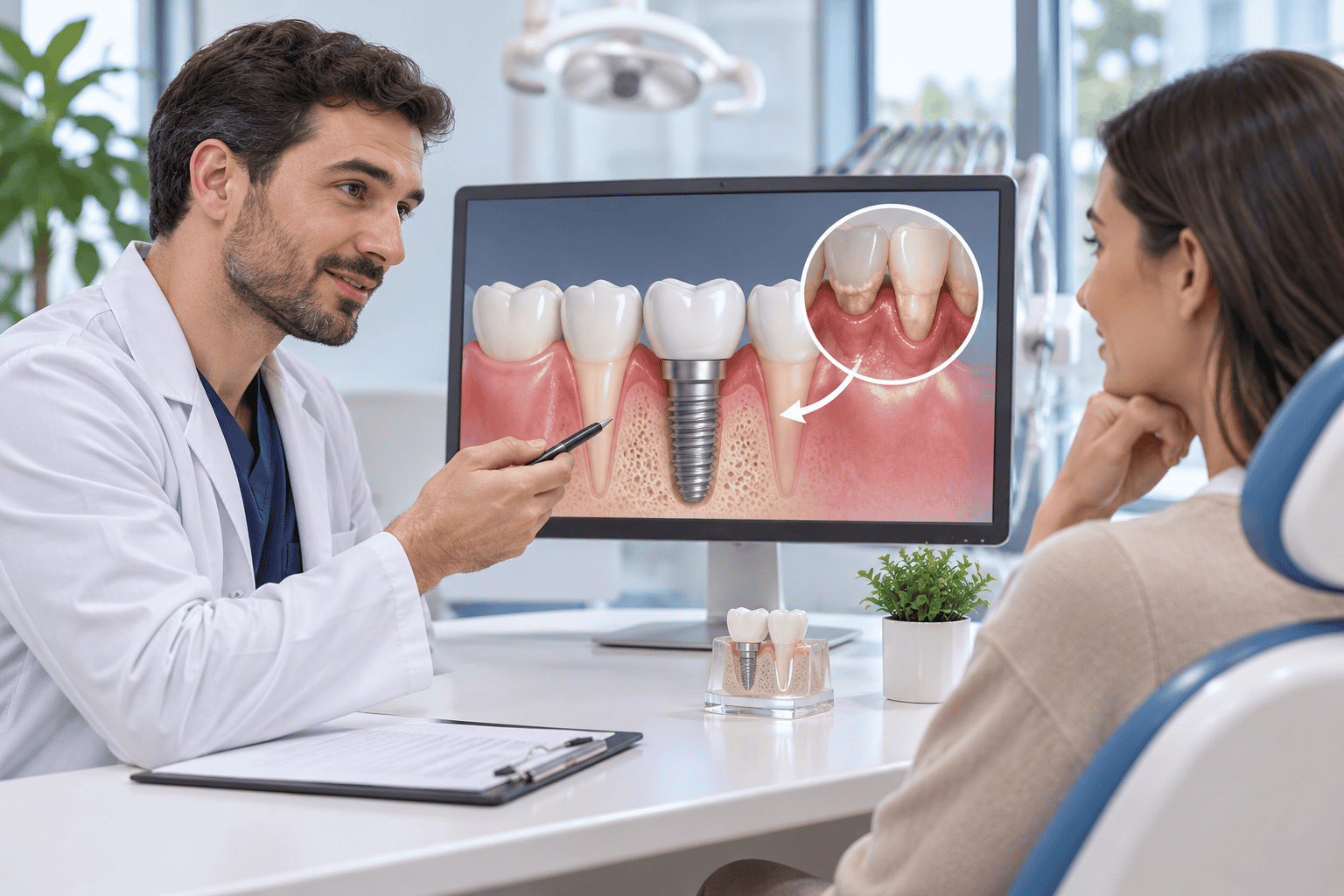
A dental implant is an artificial root, usually made of titanium, placed in the bone to support a crown or denture. Unlike a natural tooth, an implant does not have a periodontal ligament; it integrates with the bone through osseointegration. The tissues around it require careful cleaning and professional check-ups, especially in patients who have had periodontal disease.
A history of periodontitis increases the risk of inflammatory problems around implants, including peri-implantitis. This does not mean every implant will fail, but it makes risk assessment, an individual plan and ongoing maintenance essential. The health of any remaining natural teeth must not be overlooked during implant rehabilitation.
Active or Stabilized Periodontitis: Why Does It Matter?
Active periodontitis can cause bleeding, swelling, deep pockets, persistent inflammation and bone loss. At this stage, treating the gums before elective implant surgery is a priority. Once the disease is stabilised, the patient can be assessed for replacement of missing teeth, but the risk of recurrence remains. It is therefore important to distinguish successful gum treatment from the complete absence of risk.
At Family Dental Care, periodontal care in Albania includes the assessment and treatment of gum problems. This is an important step when a patient wants implants after losing teeth due to periodontitis.
What Does It Mean to Stabilize Periodontitis Before Implant Placement?
Stabilising the disease does not simply mean being free of pain. The clinician reassesses the response to treatment, measures periodontal pockets, checks for bleeding and plaque, and looks for any areas that remain active. Only then can they determine whether it is prudent to proceed with an implant. There is no universal waiting period that applies to every patient.
What Tests Are Needed Before Dental Implants with Periodontitis?
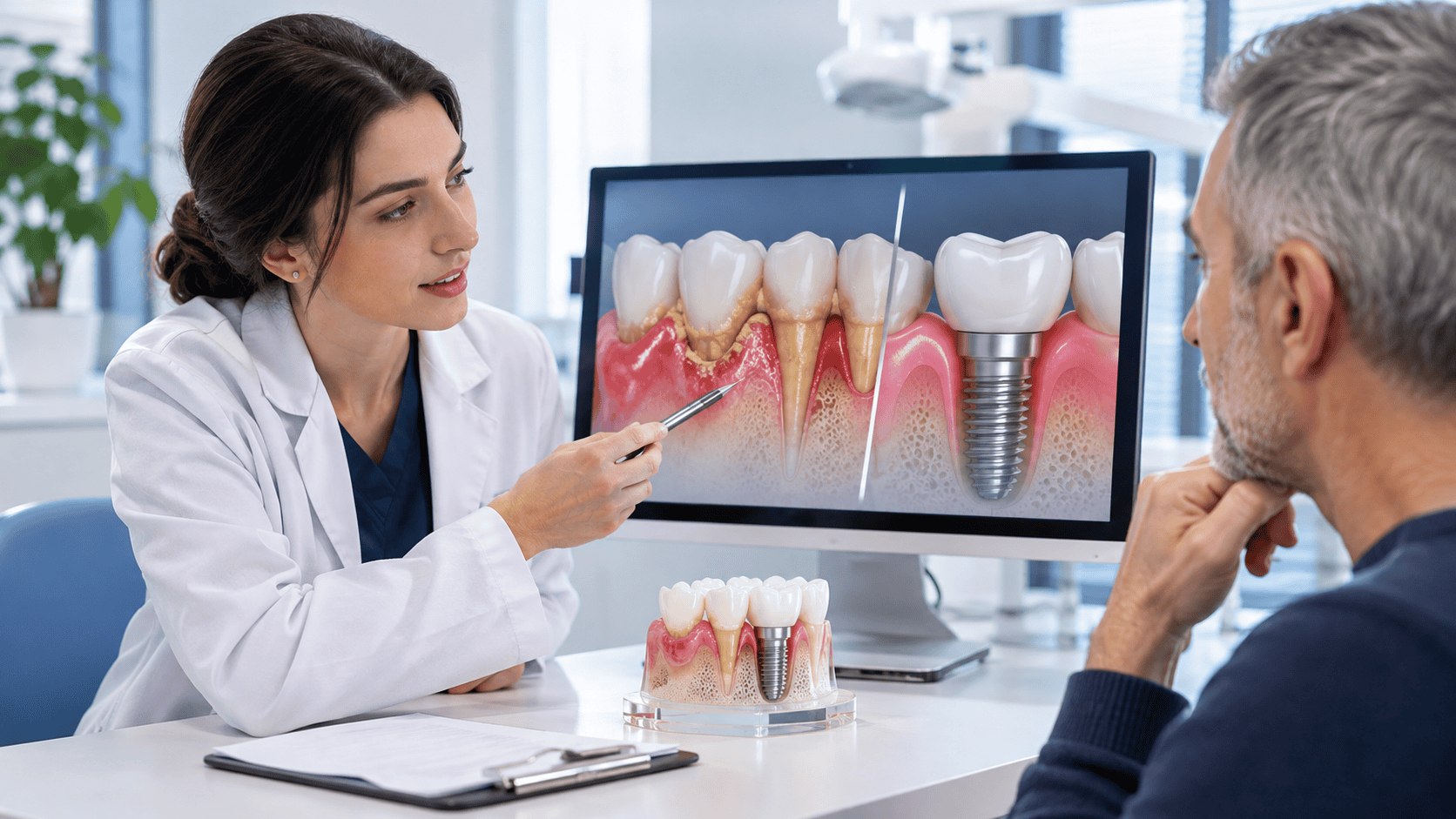
The examination should cover the whole mouth, not just the space left by the missing tooth. The dentist checks for inflammation and mobility, assesses the health of the remaining teeth, and considers whether the patient can maintain thorough oral hygiene. The assessment also helps identify teeth that can be saved, avoiding unnecessary extractions.
To explore the topic further, you can view Family Dental Care’s Instagram post about implant dentistry and treatment planning. The social media post is for illustrative purposes and does not replace an individual clinical assessment.
The assessment may include:
- Examination of the gums and bleeding.
- Measurement of periodontal pockets.
- Assessment of natural tooth mobility.
- X-rays to assess bone support.
- Assessment of missing teeth and teeth that may be saved.
- Consideration of smoking, diabetes and other relevant clinical factors.
- Assessment of oral hygiene habits and willingness to attend check-ups.
X-rays and, where indicated, three-dimensional imaging may be needed to plan implant placement. Not every patient automatically needs the same diagnostic tests. Relevant medical conditions, such as diabetes, and modifiable factors such as smoking, which can affect the response to treatment, should also be assessed.
How Is Periodontitis Treated Before Dental Implants?
Treatment often begins with non-surgical periodontal therapy to remove plaque and tartar above and below the gumline. The patient receives personalised instructions on brushing and interdental cleaning. Reducing bacterial deposits is essential both to protect natural teeth and to prepare for possible implant treatment.
If some areas do not respond adequately, the clinician may consider additional periodontal procedures. The choice depends on the severity of the disease, the location of the defects and the prognosis for the teeth.
Before planning dental implants in Albania, it is necessary to confirm that the inflammation is under control. For patients travelling from Italy, rushing surgery to complete all treatment in a single visit could increase the risk of complications. The length of the stay should be adapted to clinical needs and any healing time required, not the other way around.
Do All Teeth Affected by Periodontitis Need to Be Extracted?
No. Having periodontitis does not automatically justify extracting teeth that can still be maintained with an acceptable prognosis.
The decision should take into account mobility, the amount of remaining bone, response to treatment and long-term prognosis. Implants are used to replace missing or non-restorable teeth; they are not a preventive solution for everyone. If a natural tooth can be kept with an acceptable prognosis, the dentist should carefully consider preserving it.
Can You Get Dental Implants with Bone Loss?
Advanced disease can reduce the amount of bone available. After extraction, further changes to the bone can make implant planning more complex.
The dentist must assess the volume and position of the bone tissue, as well as its relationship to neighbouring teeth. There is no one-size-fits-all solution for every type of defect.
In selected cases, a bone graft may be considered to increase the available bone volume and allow for proper implant planning. It is not necessary for every patient and does not automatically guarantee that implants can be placed. The decision depends on the type of defect, its anatomical location, the planned prosthesis and the available alternatives.
Periodontitis and Dental Implants: Possible Clinical Scenarios
| Situation | What it means | Step to consider |
|---|---|---|
| Periodontitis still active | Uncontrolled inflammation | Periodontal treatment and reassessment |
| Periodontitis treated and stable | Residual risk to monitor | Planning and maintenance |
| Significant bone loss | Bone volume to be assessed | Thorough examination and possible alternatives |
| Inadequate oral hygiene | Increased plaque buildup | Improving habits before surgery |
| Natural teeth that can be saved | Extraction may not be necessary | Conservative assessment |
Periodontitis and Peri-Implantitis: What’s the Difference?
Periodontitis affects the supporting tissues of natural teeth. Peri-implantitis, on the other hand, affects the tissues around an implant and involves inflammation associated with progressive bone loss. Peri-implant mucositis affects the soft tissues without the same bone loss. Bleeding, swelling, an unpleasant taste or unusual movement of an implant-supported restoration require prompt assessment.
Peri-implant mucositis, which affects the soft tissues without the same bone loss, can develop before peri-implantitis. Bleeding and swelling around an implant should not be ignored.
Implants need cleaning and checkups just like natural teeth. Replacing a tooth does not eliminate the possibility of developing inflammatory diseases over time.
How to Protect Implants After Periodontitis: Hygiene and Checkups
Ongoing maintenance is an integral part of treatment, not an optional checkup. Patients with a history of periodontitis may need more frequent appointments, depending on their individual risk. The dentist must check not only the implants but also any remaining natural teeth. The crown or bridge should also be designed to allow effective cleaning.
The most important habits include:
- Thorough brushing and cleaning between the teeth with appropriate tools.
- Professional cleanings according to the agreed plan.
- Monitoring bleeding and the tissues around the implants.
- Reducing modifiable risk factors, including smoking.
- Promptly reporting swelling, discomfort or movement.
If treatment is needed for the gums, teeth and prostheses, a coordinated dental treatment plan may be helpful. The sequence should prioritise tissue health before focusing on definitive rehabilitation.
From our Instagram: For general information about dental implants, also see a Family Dental Care post on Instagram. Remember that a history of periodontitis requires a specific assessment.
Frequently asked questions about dental implants and periodontitis
Can I Get Dental Implants If I Had Periodontitis Years Ago?
It may be possible if the disease has been treated and your current condition is suitable. Your history of periodontitis must still be taken into account when assessing the risks.
Does Periodontitis Need to Be Treated Before Implant Placement?
The inflammation must be treated and brought under clinical control before proceeding. The clinician will then reassess the condition of the bone and gums.
Can Implants Develop Infections?
Yes, the tissues around implants can become inflamed and develop peri-implant diseases. Good oral hygiene and regular checkups help identify problems early.
Does Bone Loss Always Rule Out Dental Implants?
No, suitability depends on the extent and location of the bone loss. Some patients may be candidates for additional procedures, while other options may be preferable for others.
Do I Need to Continue Periodontal Checkups After the Procedure?
Yes, especially if you have had periodontitis before. Your schedule will be tailored to monitor both your natural teeth and your implants.
Gums First, Then Implants: Request an Assessment in Tirana
At Family Dental Care, we can help you understand which periodontal treatments and assessments you may need before considering implants. Contact us for a personalized assessment that takes into account your remaining teeth and long-term maintenance.
- Email: info@familydentalcareal.com
- Headquarters Kongresi i Manastirit Road, Tirana, Albania
- Contact: Request a consultation