EN
 IT
 SQ
 ES
 FR

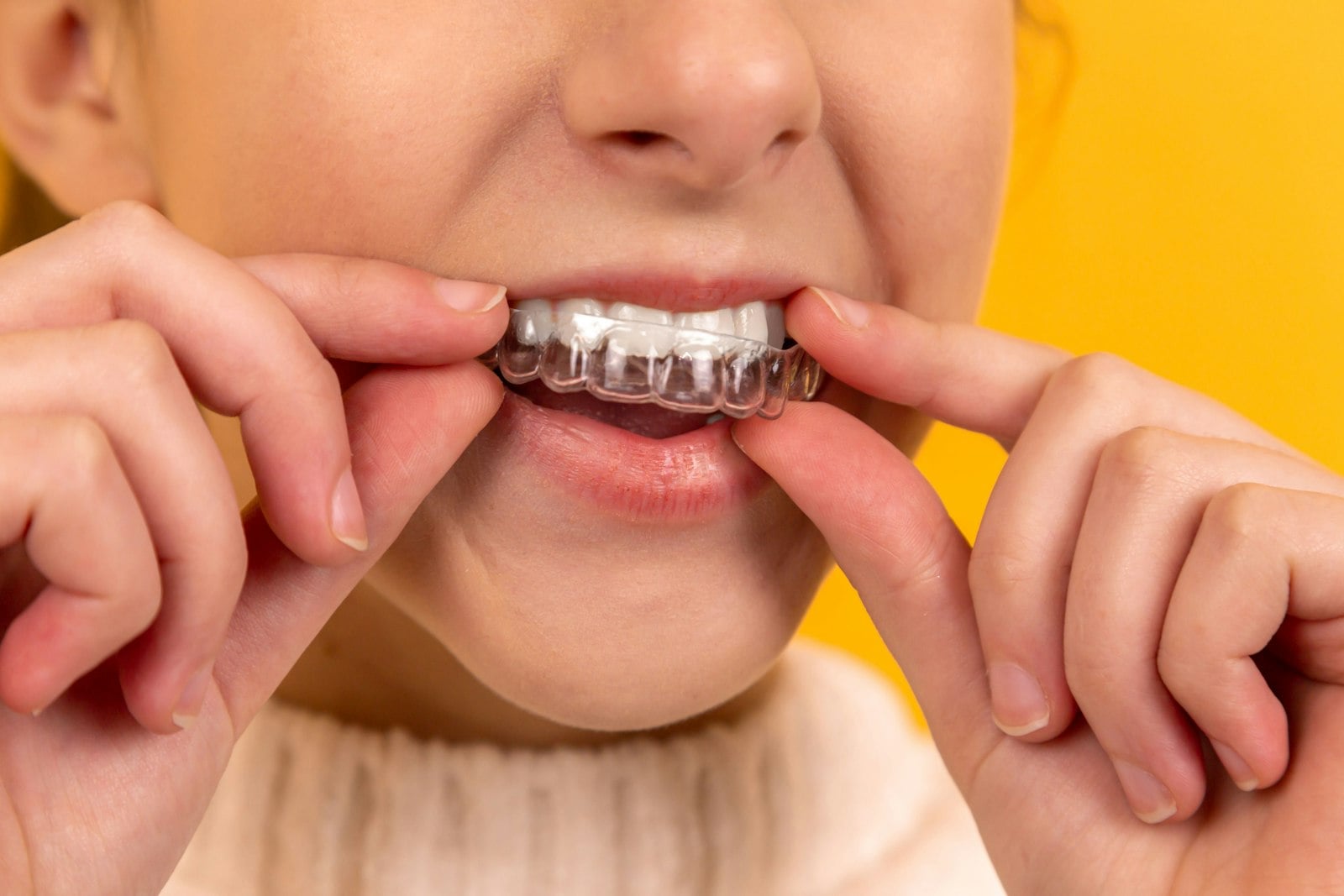
Can you get Invisalign with dental crowns or implants? In many cases, yes, but existing restorations affect how clear aligner treatment is planned. A natural tooth with a crown can often be moved because it still has its root and periodontal ligament. An osseointegrated implant, on the other hand, remains fixed in the bone and cannot be repositioned with clear aligners. Before starting Invisalign, it is essential to assess the roots, gums, bite, crowns, bridges, implants, and realistic treatment goals.
Can You Get Invisalign with Dental Crowns?
A crown covers a natural tooth, which retains its root and periodontal ligament. When the root, gums, and supporting bone are in good condition, orthodontic movement may be possible even with the restoration in place. However, the crown’s stability, any underlying decay, contact with other teeth, and the direction of the planned movements all need to be assessed.
To learn more about the topic visually, you can watch Family Dental Care’s Instagram post about clear aligners and orthodontic treatment. The social media post is for illustrative purposes and does not replace a personalized clinical assessment.
Before starting aligner treatment, the clinician checks the fit of the crown, whether there is any decay, and the condition of the gums and supporting tissues. An unstable crown or inflamed gums may need treatment first. A zirconia or ceramic crown may also require special consideration if the orthodontic plan involves placing attachments.
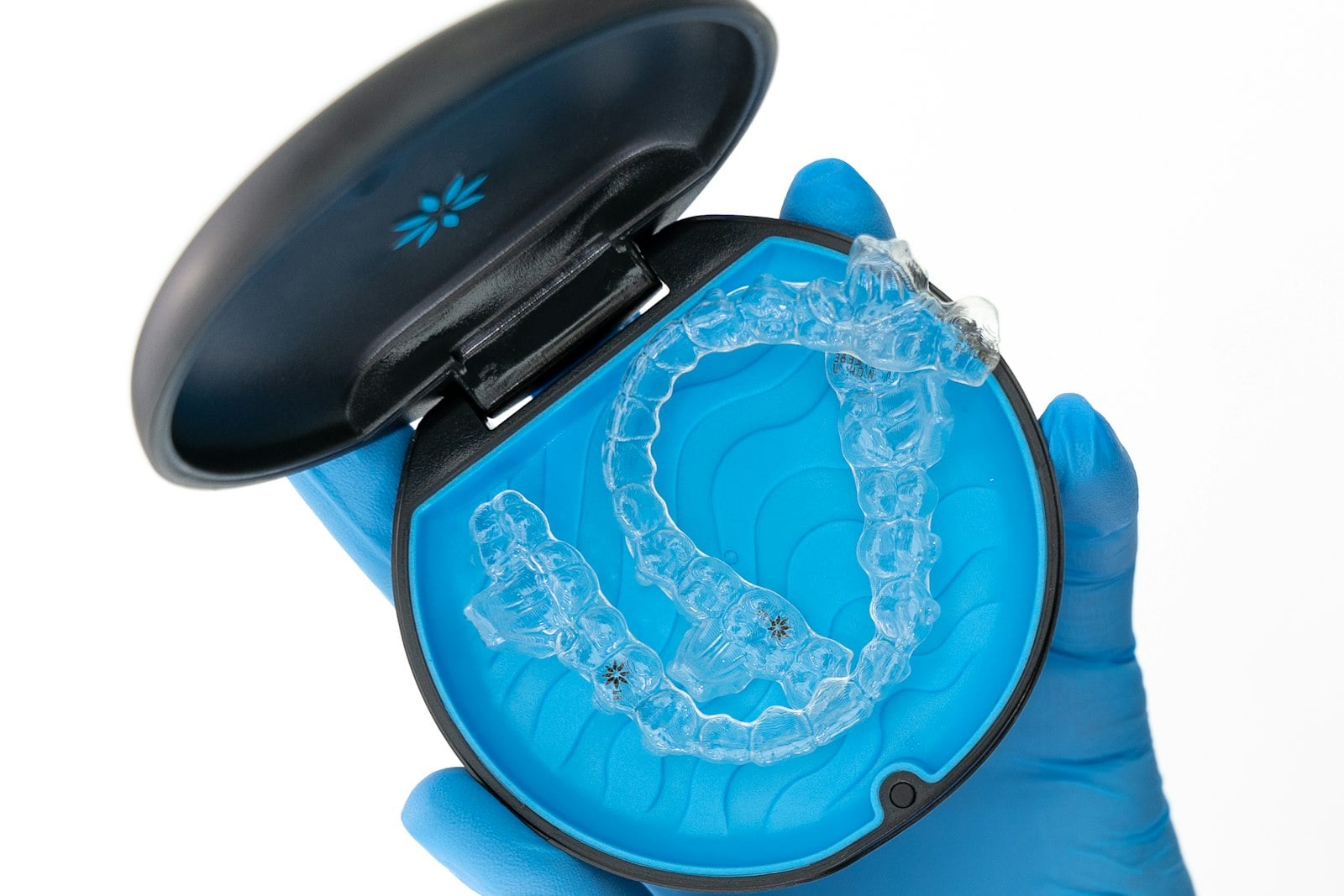
At Family Dental Care, Invisalign treatment in Albania is planned around each patient’s individual needs. If you’re considering Invisalign with dental crowns, mention your restorations at your first consultation, even if they aren’t causing any discomfort.
Why Can Clear Aligners Move a Tooth with a Crown but Not an Implant?
A natural tooth is connected to the bone by the periodontal ligament, which allows the tissues to remodel in response to controlled orthodontic forces. Having a crown on the tooth does not eliminate this mechanism, as long as the supporting structures are healthy and movement is clinically appropriate.
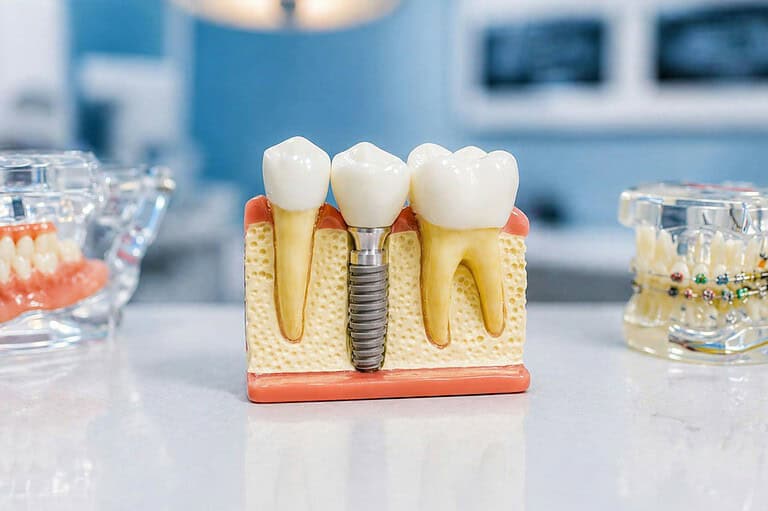
An implant, on the other hand, integrates directly with the bone through osseointegration. It does not have the same ligament and cannot be moved by the usual forces applied by aligners.
This difference affects smile planning. A crown attached to an implant stays in the implant’s position, while nearby natural teeth can be assessed to see whether they can be moved.
Invisalign with Dental Implants: What Movements Are Possible?
If an implant is already in place, the clinician treats it as a fixed structure. Natural teeth may be realigned around the implant, provided the final result is compatible with its position and the bite. An implant that is poorly positioned relative to the orthodontic plan may limit treatment options or require consideration of alternative restorations.
The page about dental implants in Albania explains the difference between the structure placed in the jawbone and the restoration that replaces the tooth. This distinction is important when deciding which orthodontic treatment to pursue.
From our Instagram: To learn more about clear aligners, take a look at this Invisalign reel from Family Dental Care on Instagram. Whether Invisalign is suitable when you have crowns or implants must still be assessed on an individual basis.
Invisalign with Crowns, Implants, Bridges or Veneers: What’s the Difference?
| Situation | Orthodontic movement | Assessment required |
|---|---|---|
| Natural tooth with a crown | Often possible | Root, gums, and crown stability |
| Crown on an implant | Implant cannot be moved | Fixed position relative to the final plan |
| Bridge spanning multiple teeth | Limited movement of individual teeth | Connections between the supporting teeth |
| Tooth with a veneer | Possible in selected cases | Restoration integrity and bonding |
| Unrestored natural tooth | Possible if suitable | Dental and periodontal health |
This table helps you understand when Invisalign with crowns, implants, or bridges may be feasible, but it should not be used to decide on treatment yourself. Suitability depends on the movements required and the condition of your mouth.
Can Invisalign Attachments Be Applied to Zirconia or Ceramic Crowns?
Attachments are small composite bumps used to help aligners control certain movements. Bonding procedures differ for enamel, ceramic, and zirconia: the clinician must assess the material, the condition of the restoration, where to place the attachment, and whether it is actually needed. With Invisalign and dental crowns, having a crown does not automatically mean an attachment cannot be placed.
Invisalign with a Dental Bridge: When Is It Possible?
A bridge connects two or more teeth with a prosthetic structure. This connection can limit independent movement of the teeth involved, which is central to many aligner treatment plans.
In some cases, other parts of the dental arch can be treated without directly involving the bridge. In other cases, the type of connection may mean a different orthodontic approach is needed.
Is It Better to Get Invisalign Before or After Dental Implants?
If a tooth is missing and the neighboring teeth are misaligned, it may be helpful in some cases to correct their position first to create enough space for the implant and final crown. An implant that has already integrated with the bone cannot be moved later. That’s why the ideal sequence should be established through coordinated orthodontic and implant planning.
Treatment may include:
- Checking the health of your teeth and gums.
- Assessing your bite and any missing spaces.
- Planning the movement of natural teeth.
- Orthodontic treatment when indicated.
- Reassessing the space available for the implant.
- Planning the final restoration and retention.
Not everyone needs to follow this sequence. Some clinical conditions may call for a different order of treatment, which can be explained during your consultation.
Do Dental Crowns Need to Be Replaced After Invisalign?
Not necessarily. After Invisalign treatment with dental crowns, a stable, properly fitting crown can often be kept even after the natural teeth have moved.
In other cases, the new position may change how the restorations fit together, making it advisable to adjust or replace the crown.
To understand the role and limitations of these restorations, learn more about dental crowns in Albania. The treatment plan should preserve existing healthy structures as much as possible.
Which Dental Problems Need to Be Treated Before Invisalign?
Before starting Invisalign with dental crowns or implants, a broader assessment is needed than simply checking the visible alignment. It is important to examine cavities, gums, roots, restorations, and tooth position when biting down.
Even an implant that seems stable may have a problem with the surrounding tissues. If inflammation is found, it should be treated before starting non-urgent orthodontic tooth movement.
For patients with multiple needs, coordinated dental treatment can help determine the order of care. The goal is to prevent orthodontic treatment from interfering with future restorations, or restorations from limiting important tooth movements.
Invisalign in Albania if You Live in Italy: How to Arrange Checkups
If you live in Italy and choose to have Invisalign treatment in Tirana, first clarify how often you’ll need to attend in person, how your progress will be monitored, and who to contact if you have any problems. Remote check-ins may be useful when clinically appropriate, but they don’t automatically replace all necessary assessments. Also ask how retention and any adjustments to crowns or other restorations will be planned after alignment.
Frequently asked questions about Invisalign with crowns or implants
Can I get Invisalign with a zirconia crown?
Yes, Invisalign with dental crowns is often possible if there is a natural tooth under the crown that is suitable for movement. A dental professional must check that the restoration is stable and the supporting tissues are healthy.
Can Invisalign Move a Dental Implant?
No. An implant that has integrated with the bone cannot be moved like a natural tooth. Other teeth may be moved around it if the treatment plan allows.
Do I Need to Remove My Crowns Before Treatment?
Not always. Removal or replacement is considered only if clinically necessary or if the crown interferes with the orthodontic plan.
Can I Get Invisalign If I Have a Dental Bridge?
It depends on the type of bridge and the movements required. Because a bridge connects multiple teeth, it may limit the ability to move some teeth individually.
Do You Need a Retainer After Invisalign Even with Implants?
Yes. Invisalign treatment is generally followed by a retention phase using a retainer recommended by your orthodontist. Although implants remain fixed in the bone, natural teeth can shift over time. Retention helps maintain the result and should be adapted to your existing restorations.
Find Out if Invisalign Is Right for Your Crowns or Implants
At Family Dental Care, we assess whether Invisalign with dental crowns or implants is a realistic option for you, checking your crowns, implants, and alignment. Contact us to discuss an orthodontic plan tailored to your situation and existing restorations.
- Email: info@familydentalcareal.com
- Headquarters Kongresi i Manastirit Road, Tirana, Albania
- Contact: Request an Invisalign consultation